How to Allow AI Search While Blocking Model Training
Search, training and user-triggered retrieval are different purposes. A publisher can document separate decisions for each user-agent instead of applying one wildcard rule to every AI product.
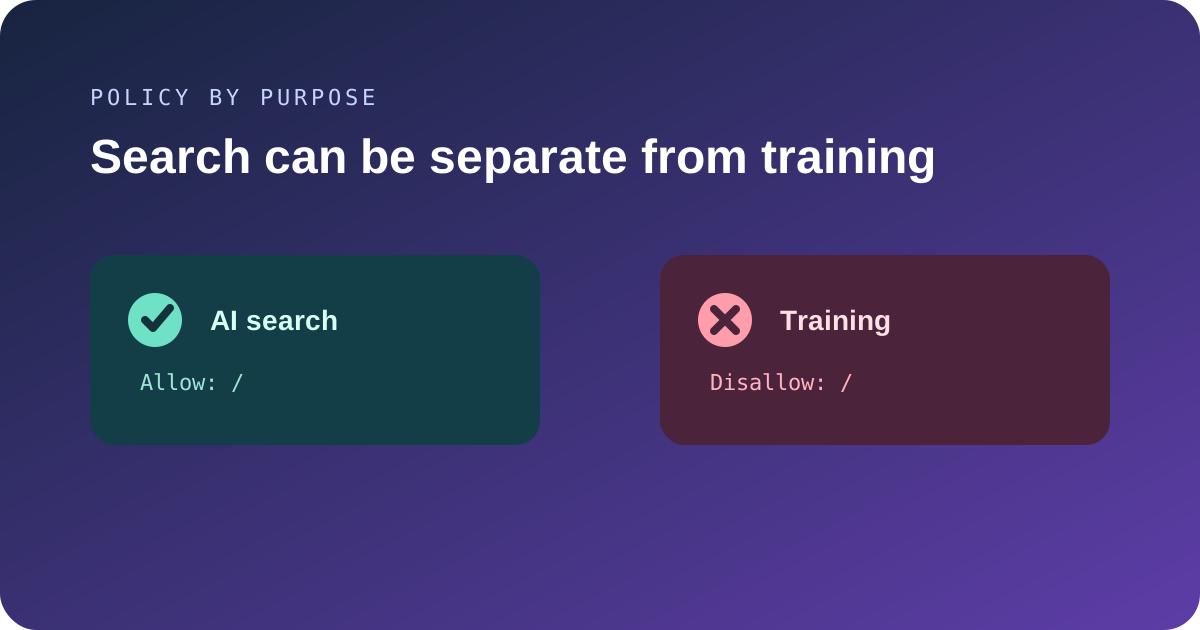
Map every documented user-agent to search, training or user-requested retrieval before writing rules.
Start with the purpose of each token
Map every documented user-agent to search, training or user-requested retrieval before writing rules.
For example, a policy may allow a search token, disallow a training token and make a separate decision for a user-triggered fetcher. Verify the operator documentation and record the review date.
Use explicit groups and test the live file
Write specific groups before broad fallbacks, then fetch the deployed robots.txt and test representative paths.
A simplified pattern is illustrative only: User-agent: OAI-SearchBot / Allow: /, followed by a separate User-agent: GPTBot / Disallow: /. Your policy should reflect your content rights, contracts and legal advice.
Explain the limits
Robots.txt communicates a preference; it is not authentication, licensing or a guarantee of citation.
Protect private material with access control. Monitor logs and Search Console separately, and review policy whenever a provider changes its tokens or product purpose.
Practical checklist
Use these steps to turn the article’s principle into a repeatable publishing and measurement habit.
- Record the exact URL, crawler token and date before changing a rule.
- Separate a published directive from an observed HTTP response and from search visibility.
- Link to the relevant official documentation and state what the test cannot prove.
Frequently asked questions
Will blocking GPTBot block AI search?
Not necessarily when the provider uses separate tokens, but verify the current documentation and your live responses.
Is this legal advice?
No. Rights, contracts and jurisdiction-specific requirements should be reviewed with qualified counsel.